The musicians, devotees, and organizers who built Krishnacore — where they came from, the bands they made, their spiritual paths, and what they do today.
Ray Cappo
Raghunath das
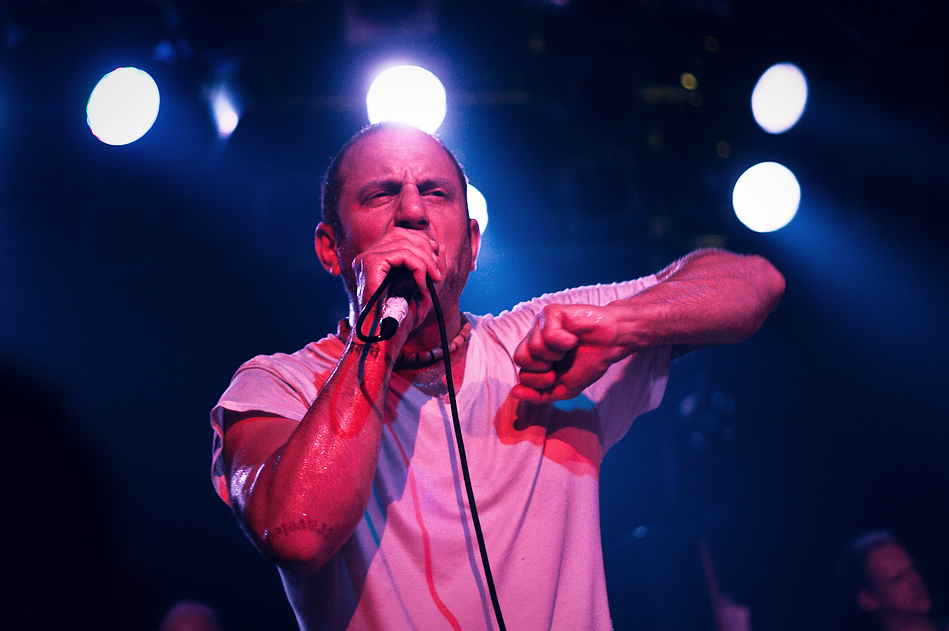
Ray Cappo, SO36 Berlin, 2010. Photo: Libertinus Yomango, CC BY-SA 2.0, via Wikimedia Commons (share-alike applies).
Initiated in 1991 as Raghunath; roughly six and a half years as a monk across ashrams in India, the US and Europe
Today
Bhakti and vinyasa yoga teacher; co-hosts the Wisdom of the Sages podcast; co-founder of Supersoul Farm; partner and father of five
Cappo fronted the youth-crew band Youth of Today before founding Shelter as the outward-facing, missionary side of Krishnacore. He now teaches and writes from a householder's life rather than a monastery.
Ray “Raghunath” Cappo teaching in India today. Photo courtesy of raghunath.yoga (used with permission).
John Porcelly
"Porcell" · Paramananda das
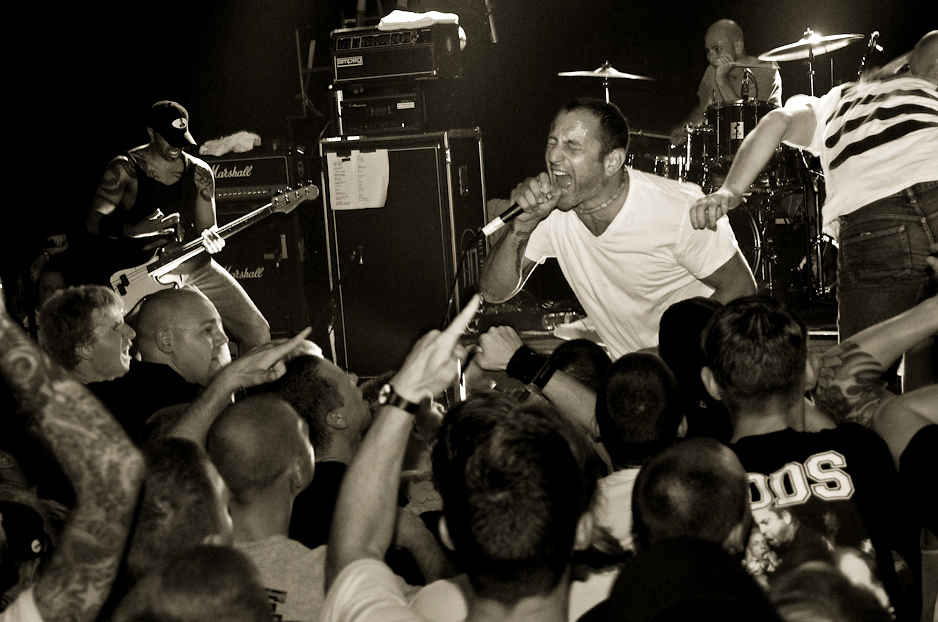
Porcell (guitar) with Youth of Today, SO36 Berlin, 2010. Photo: Libertinus Yomango, CC BY-SA 2.0.
Joined ISKCON in the early 1990s alongside joining Shelter; spiritual name Paramananda das
Today
Travels the US teaching vinyasa and bhakti yoga; maintains a daily practice
Cappo's Youth of Today co-founder and a fixture of the straight-edge scene, Porcell followed the same path from hardcore discipline into devotional yoga teaching.
Vic DiCara
Vraja Kishor das
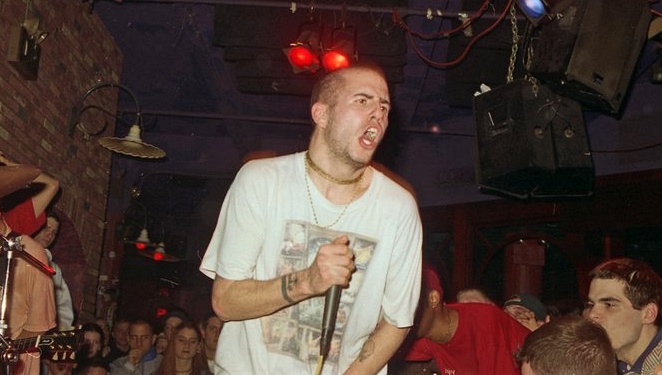
Vic DiCara, live with 108. Via No Echo.
Born
27 July 1970, Bay Shore, New York
Bands
Beyond, Inside Out (with Zack de la Rocha), Shelter, Burn; co-founded 108 in 1991
Spiritual path
Initiated in the Gaudiya sampradaya as Vraja Kishor das; roughly eight years living in ISKCON temples with pilgrimages in India; later left the movement
Today
Professional Vedic astrologer since 2008 and author; wrote the memoir Train Wrecks and Transcendence
DiCara built the harder, more confrontational side of Krishnacore with 108. He has spoken openly about leaving ISKCON and how his beliefs changed over time.
Rob Fish
Rasaraja dasa
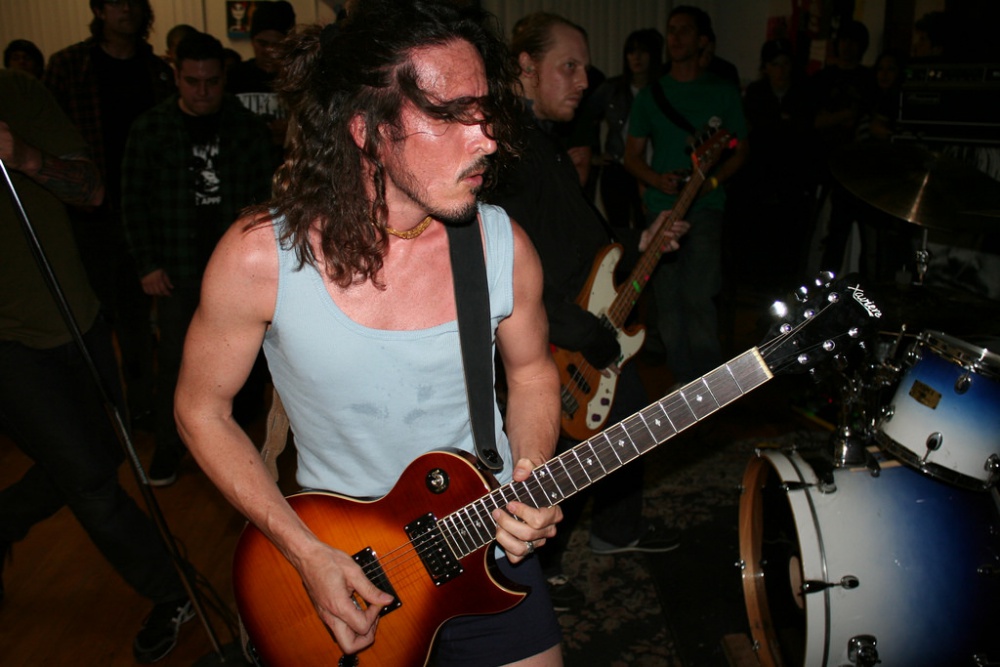
Rob Fish fronting 108. Via No Echo.
Bands
Release, Resurrection, 108, The Judas Factor, Every Scar Has a Story
Spiritual path
Devotional name Rasaraja dasa; a long engagement with the Krishna faith discussed at length in interviews
Today
Outspoken on systemic racism and social justice in hardcore; active with recent releases and podcasts
Fish joined 108 during the recording of an early EP and became the voice of its most intense records. His public views have shifted markedly from the 1990s to today.
Larry Pugliese
The pre-history catalyst
No known photograph in the public archive — a contribution wanted
Role
The Hare Krishna devotee who brought Krishna Consciousness into New York hardcore in the mid-1980s, before the subgenre had a name
How
Ran a devotee house in northern New Jersey; sponsored free prasadam in Tompkins Square Park, clothing drives, and shows for Lower East Side punks and skinheads
Pugliese is the on-ramp from ISKCON outreach to the Cro-Mags and New York straight-edge milieu that later produced Shelter and 108.
John Joseph
Cro-Mags
John Joseph (Cro-Mags), 2015. Photo: DixonJohnston, CC BY-SA 4.0, via Wikimedia Commons (share-alike applies).
Role
Vocalist of the Cro-Mags; one of the earliest NYHC figures to bring Krishna and eastern-spiritual themes into hardcore on The Age of Quarrel (1986)
Today
Author (The Evolution of a Cro-Magnon; Meat Is for Pussies), spoken-word performer, and endurance athlete
A former Bad Brains roadie who lived in a Hare Krishna temple in Hawaii before returning to New York, John Joseph carried Krishna themes into the Cro-Mags years before Krishnacore existed as a genre.
Steve & Kate Reddy
Equal Vision · MerchNow · Mantralogy
No known photograph in the public archive — a contribution wanted
Steve Reddy
Former Youth of Today roadie and Krishna devotee; ran Equal Vision Records from his New York apartment and bought the label from Cappo; later co-created MerchNow
Kate Reddy
Steve's wife; former 108 guitarist ("Kate-08"), who returned to 108 in 2016; co-created MerchNow and founded Mantralogy, Equal Vision's devotional and kirtan sub-label
The couple turned Equal Vision from a bedroom operation into the label that carried much of Krishnacore. The year Steve bought it is given variously as 1991, 1992, or 1993 across sources; the archive presents it as the early 1990s.